Crocheting for a newborn baby is one of the most heartwarming, creative, and satisfying endeavors any crafter can undertake. There is something truly magical about working with soft pastel yarns to create a tiny pair of shoes that will keep a new baby’s feet warm, cozy, and protected. Newborn baby booties are more than just practical footwear; they are cherished keepsakes, popular baby shower gifts, and essential components of a newborn’s hospital coming-home outfit.
Whether you are a complete beginner picking up a crochet hook for the very first time, an expectant parent preparing a nursery wardrobe, or an experienced artisan looking to build a profitable handmade baby item shop, this ultimate guide is designed for you. In this comprehensive first part of our guide, we will explore why booties are the ideal beginner project, break down the science of choosing skin-safe baby yarns, and cover the essential tools required to craft picture-perfect baby shoes with confidence.
Disclosure: This post contains affiliate links. As an Amazon Associate, we earn a small commission from qualifying purchases at no extra cost to you. We only recommend products we truly love and trust.
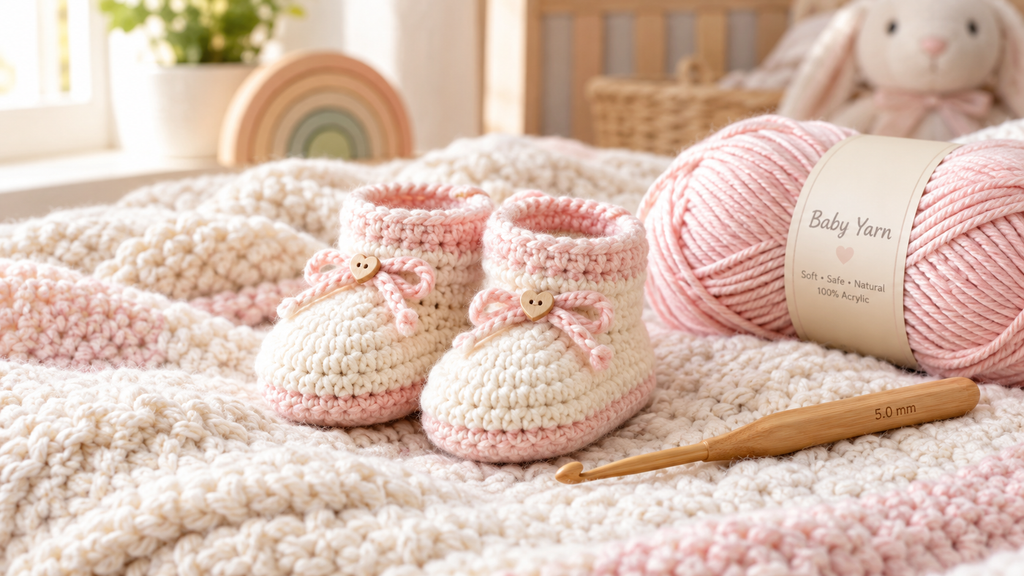
As someone who is passionate about baby products, especially newborns, in this article I will show you how to crochet a small pair of baby shoes for newborns. I will also help you choose the right yarn and crochet hook for this delicate project, so you can create a comfortable and adorable pair of handmade shoes for your little one.
- Why Newborn Baby Booties Are the Best Beginner Crochet Project
If you are new to the art of crochet, staring at complex garment patterns or massive blanket projects can feel overwhelming. Newborn booties offer the perfect entry point into the craft while delivering immense satisfaction. Here is why every beginner should start with baby booties:
Fast and Gratifying Results: Unlike large afghans or adult sweaters that can take weeks or months to complete, a pair of newborn booties can easily be crocheted in just one or two hours. This fast turnaround keeps your motivation high and builds instant confidence in your crafting ability.
Minimal Material Costs: Booties require very small amounts of yarn—often less than 50 yards in total. This makes them an extremely economical project and an excellent “stash buster” for utilizing leftover yarn balls from previous crafting projects.
Fundamental Skill Masterclass: Designing booties introduces you to nearly all essential crochet techniques in a micro-format. You will master working in foundation chains, stitching in continuous rounds, executing increases and decreases for shaping, working in back loops only, and maintaining consistent stitch tension.
High Demand and Monetization Potential: Handmade baby items remain among the top-selling product categories on e-commerce platforms like Etsy and at local craft fairs. Parents and gift-givers actively seek unique, high-quality, handmade baby booties, making this skill a fantastic foundation for a profitable online shop. - Choosing the Right Yarn for Delicate Baby Skin
A newborn infant’s skin is exceptionally delicate, thin, and prone to allergic reactions or friction irritation. The most crucial decision you will make before starting your project is selecting the right yarn. Never choose a yarn based purely on its color; texture, breathability, and fiber safety must take priority.
Key Factors in Selecting Baby Yarns - Hypoallergenic Softness: The yarn must feel cloud-soft against sensitive skin. Avoid scratchy synthetic blends, harsh rustic wools, or fibrous yarns that shed loose particles, as babies frequently put their feet near their mouths.
- Machine Washability: Babies are naturally messy, and new parents rarely have the time to hand-wash and flat-dry baby clothes. Always opt for yarns labeled as “machine washable” and “tumble dry safe” to ensure your booties are practical for daily use.
- Appropriate Yarn Weight: For newborn booties, Light Worsted (Category 3) or Fine Sport Weight (Category 2) yarn is strongly recommended. Heavy worsted or bulky yarns make booties look oversized, clunky, and rigid on tiny newborn feet.
Recommended Fiber Types
100% Combed Cotton Yarn: Cotton is natural, breathable, hypoallergenic, and highly durable. It provides crisp stitch definition, making your finished booties look sharp, clean, and professional.
Premium Baby Acrylic: Modern baby-grade acrylic yarns are engineered specifically for infants. They are lightweight, budget-friendly, non-irritating, extremely soft, and available in a vast array of lovely pastel tones.
Bamboo & Cotton Blends: Bamboo fibers offer natural antibacterial properties, exceptional softness, and a subtle silky sheen that elevates the visual appeal of handmade baby footwear.
👉 Click the link to check the price on Amazon
- Essential Crochet Tools and Equipment
Equipping yourself with the proper tools from the start guarantees clean stitches, accurate sizing, and a comfortable, pain-free crafting experience. Here is the ultimate tool list required for crafting newborn booties: - Ergonomic Crochet Hooks
For newborn booties, hook size directly influences the tightness and structure of the shoe.
Recommended Hook Sizes: A 3.5 mm (US E-4) or 4.0 mm (US G-6) hook is ideal. Using a slightly smaller hook than recommended on the yarn label creates a denser, firmer fabric that helps booties retain their upright shape without floppy walls.
Ergonomic Handles: Rubber or silicone-gripped ergonomic hooks reduce hand fatigue and wrist strain, allowing you to stitch comfortably for extended periods. - Locking Stitch Markers
Working in continuous rounds can easily cause you to lose track of where a row begins or ends. Placing a locking stitch marker in the first stitch of every round is non-negotiable for beginners to avoid miscounting and unevenly sized booties. - Blunt Tapestry Needles (Yarn Needles)
A metal or plastic tapestry needle with a large eye and rounded tip is necessary for weaving in loose yarn ends securely and sewing decorative buttons, ribbons, or bows onto the booties safely. - Precision Craft Scissors
Sharp, compact scissors allow for clean thread cuts without fraying your yarn ends during color changes or final finishing touches.
👉 Click the link to check the price on Amazon
. The Complete Newborn Booties Sizing Chart
Getting the measurements right before you begin is essential to ensure your handmade booties fit comfortably without slipping off active infant feet. Below is a comprehensive sizing guide for baby footwear across various development stages:
| Age Group | Foot Length (Inches) | Foot Length (Centimeters) | Recommended Hook Size |
| Preemie / Micro | 2.5″ – 3.0″ | 6.3 cm – 7.6 cm | 3.0 mm (US C-2) |
| 0 – 3 Months (Newborn) | 3.0″ – 3.25″ | 7.6 cm – 8.2 cm | 3.5 mm (US E-4) |
| 3 – 6 Months | 3.5″ – 3.75″ | 8.9 cm – 9.5 cm | 3.75 mm (US F-5) |
| 6 – 12 Months | 4.0″ – 4.5″ | 10.1 cm – 11.4 cm | 4.0 mm (US G-6) |
Pro Measurement Tips for Crafters
Measure the Sole First: Always measure the completed foundation sole with a soft measuring tape before continuing to the shoe walls.
Adjusting Gauge: If your gauge is too loose, downsize your crochet hook by 0.5 mm rather than modifying the pattern stitch count.
Allowing Room for Growth: Newborn feet are flat and soft; always aim for a slightly relaxed fit rather than a tight fit to allow natural toe movement.
Step-by-Step Free Crochet Pattern for Beginners
Here is a classic, foolproof pattern designed specifically for beginners using fundamental stitches: Half Double Crochet (hdc), Single Crochet (sc), and Half Double Crochet 2 Together (hdc2tog).
Step 1: Crafting the Sole (The Foundation)
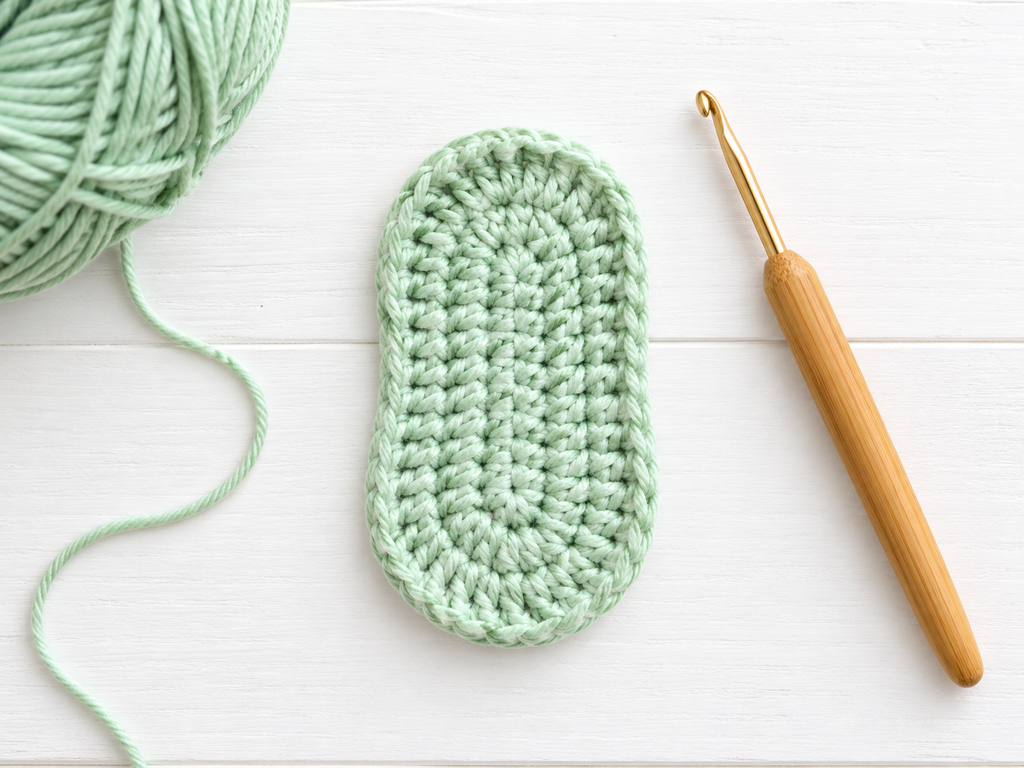
Foundation Chain: Chain 10 loosely using your 3.5 mm hook and soft Category 3 baby yarn.
Round 1: Work 2 hdc in the 3rd chain from your hook. Work 1 hdc in each of the next 6 chains. Work 5 hdc into the very last chain space (this creates the rounded toe curvature). Working along the opposite side of the foundation chain, work 1 hdc in each of the next 6 chains, and work 2 hdc in the final chain space. Join to the first hdc with a slip stitch (sl st). [Total: 21 stitches]
Step 2: Building the Sides and Heel Structure
Round 2 (Back Loops Only): Chain 1. Working exclusively in the back loops only (BLO) of every stitch, work 1 sc in each stitch around. Join with a sl st to the first sc. (This stitch creates a clean horizontal ridge that visually separates the sole from the vertical shoe walls).
Round 3: Chain 1. Working through both loops normally, work 1 hdc in every stitch around. Join with a sl st.
Step 3: Shaping the Upper Toe Decrease
Round 4: Chain 1. Work 1 hdc in the first 6 stitches. Now, locate the center 8 stitches at the front toe section. Work 4 consecutive decreases (hdc2tog) across these front 8 stitches. Work 1 hdc in the remaining 7 stitches around the heel. Join with a sl st. (You will clearly see the bootie curving inwards to cradle the baby’s foot).
Round 5 (The Ribbed Cuff): Chain 1. Work 1 sc in every stitch around to smooth out the top edge. Fasten off yarn with a 6-inch tail and weave in all ends securely.
👉 Click the link to check the price on Amazon
- Common Beginner Mistakes and Troubleshooting
Even experienced crafters encounter occasional challenges when making small items. Here is how to identify and quickly fix the most frequent beginner errors: - Uneven Bootie Sizes: If one bootie turns out noticeably larger than its pair, your stitch tension shifted mid-project. To prevent this, try to crochet both booties during the same sitting while your hand rhythm remains consistent.
- Curling or Bulging Soles: If your sole curls up like a canoe during Round 1, your foundation chain was stitched too tightly. Redo the foundation chain using a hook one size larger, then switch back to your primary hook for the remaining stitches.
- Safety First for Infants: Never attach small loose beads, glued-on rhinestones, or unreinforced buttons to newborn footwear. Infants can easily pull off loose items, creating a potential choking hazard. Always embroider decorative elements securely with yarn or heavy thread.
- Conclusion & Get Your Premium PDF Pattern Bundle
Mastering the art of crocheting newborn baby booties is a delightful milestone that opens the door to endless creative possibilities. There is something profoundly special about creating handmade footwear that will wrap a newborn’s tiny feet in love, warmth, and comfort. With just a bit of practice, high-quality baby-safe yarn, and the right ergonomic tools, you can easily craft beautiful, heartwarming gifts for baby showers, hospital coming-home outfits, or even build a thriving product catalog for your online craft business. - As you continue your crocheting journey, remember that patience and consistency are your greatest allies. Don’t be discouraged if your very first pair isn’t flawless—every stitch you make refines your gauge, improves your tension, and enhances your artistic intuition. The true beauty of handmade crafting lies in the unique personal touch, care, and attention to detail you bring to every single piece.
- Ready to take your skills to the next level? Explore different color combinations, experiment with delicate satin ribbons or wooden accent buttons, and try out new stitch variations to create a diverse, stunning collection of baby footwear. Whether you are crocheting purely for passion or aspiring to launch a successful handmade baby brand, your creative journey starts with a single loop. Happy stitching!
Take Your Crochet Skills Further!
Download our exclusive Newborn Baby Booties PDF Pattern Bundle featuring 20 step-by-step printable designs, high-definition photo tutorials, and printable sizing templates for your shop!
👉 Download the PDF Pattern Bundle
I hope you found this topic interesting and helpful. I truly enjoyed writing this article for you. Thank you so much for taking the time to read it!