Disclosure: This post contains affiliate links. As an Amazon Associate, we earn a small commission from qualifying purchases at no extra cost to you. We only recommend products we truly love and trust.
As someone who is passionate about babies and toddlers, especially handmade and traditionally crafted baby clothing, in this article we will explore how to choose the right yarn for making baby clothes. We will also introduce you to the different types of yarn and discuss their characteristics to help you choose the most suitable option for your little one.
When you pick up a crochet hook to create a garment for a new arrival, you are engaging in an act of deep love and devotion. Every single stitch represents a wish for comfort and happiness. The visual of a baby swaddled in a hand-crocheted cardigan or a cozy bonnet is a quintessential dream for many mothers, grandmothers, and crafters.
However, the reality of creating baby clothes involves a massive responsibility. A significant, yet often overlooked, fact is that a baby’s skin is structurally different from an adult’s. A fiber that feels “soft enough” to you might feel like sandpaper to a newborn. The most exquisite, intricate crochet pattern can become a source of irritation, rashes, and discomfort if the wrong yarn is used. For a garment designed to provide warmth and protection, choosing the correct material is not merely a matter of aesthetic preference; it is a fundamental question of safety and well-being. This comprehensive guide will equip you with all the knowledge needed to navigate the overwhelming yarn market and make the absolute best, safest, and softest choices for crochet baby clothes.

The Crucial “Why”: Understanding the Fragility of a Baby’s Skin
Before we discuss the fibers, we must understand the recipient. The necessity for specific “baby yarns” is not marketing hype; it is a physiological requirement. A newborn’s epidermis—the outermost layer of the skin—is 20% to 30% thinner than an adult’s. This has several profound implications for how they interact with fabrics.
Firstly, because it is thinner, a baby’s skin is significantly more permeable. This means that anything sitting on the skin, including microscopic fibers or chemicals used in the dye, is absorbed into the bloodstream far more rapidly. Secondly, their skin does not produce adequate amounts of sebum (natural oils), which act as a barrier. Without this barrier, their skin loses moisture quickly, leading to dryness, and is more vulnerable to friction.
Thirdly, their internal thermometer is underdeveloped. Sweat glands don’t activate fully at birth, so they cannot regulate heat as effectively. They can overheat quickly in dense, non-breathable fabrics or become too cold in damp ones. A wrong choice can lead to a fussy, overheating baby, or even severe skin conditions like eczema or contact dermatitis. In essence, the “perfect” baby yarn must do three things simultaneously: Maintain hypoallergenic safety, provide supreme, frictionless softness, and offer excellent thermoregulation.
The Golden Rules of Non-Negotiable Safety Certification
When you are browsing the yarn aisles or online stores for your next baby crochet project, your priority should not be color; it must be health. The yarn label holds all the secrets. For babies, look for these two main indicators of safety:
- The Oeko-Tex Standard 100 Label: Your Ultimate Peace of Mind
This is the single most important certification to look for when choosing yarn for babies, especially newborns. If a yarn carries the Oeko-Tex Standard 100 label, it means it has been rigorously tested by independent, third-party textile testing institutes and is proven to be entirely free from hundreds of harmful, prohibited, or legally regulated substances. This includes harmful chemical dyes, formaldehyde, phthalates, and heavy metals. For babies who are prone to putting everything in their mouths (including the sleeves of their crocheted sweaters), this certification guarantees the fiber is chemically safe. - Practicality: Machine Washability for Modern Life
New parents are inherently exhausted, busy, and facing endless piles of laundry. As much as you might want to create a luxury heirloom piece from an delicate fiber, if that piece requires meticulous hand-washing and flat-drying, it will likely be used once, if at all. For practical, everyday wearability, you must choose yarn that is explicitly labeled as “Machine Washable,” “Superwash” (for wool), or “Tumble Dry Low.” Safety also extends to hygiene; if the garment cannot be cleaned effectively, it is not a good choice for a baby.
👉 Click the link to check the price on Amazon
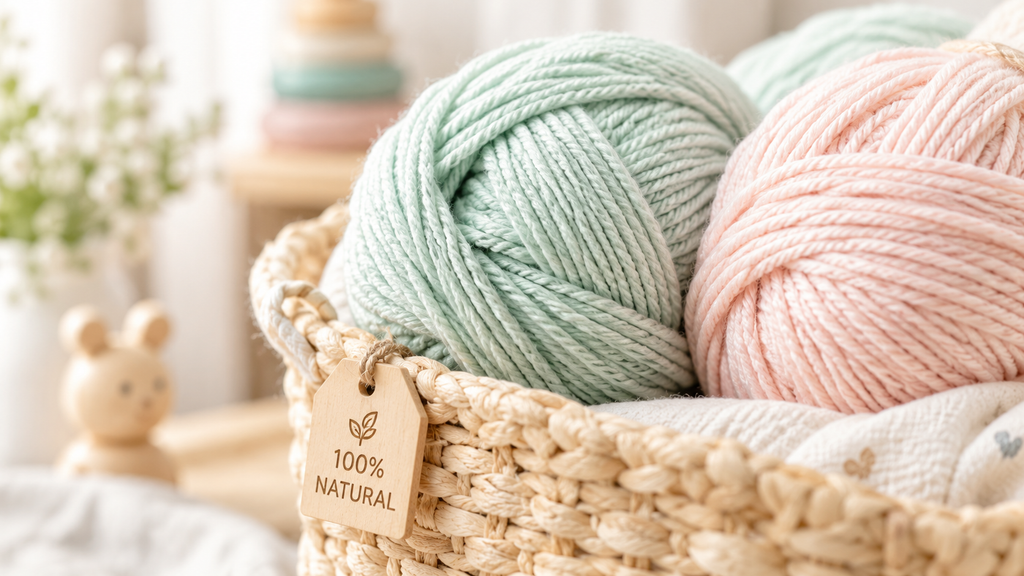
- Recommendation: A popular, certified Oeko-Tex Standard 100 Baby Yarn (like Red Heart Baby Hugs or a La Mia cotton blend).
👉 Click the link to check the price on Amazon
- The Best Natural Fibers for Babies: Gentle and Breathable
Natural fibers are highly recommended for baby clothing due to their superior breathability and moisture-wicking properties. These fibers work with the baby’s body to maintain a comfortable temperature. Let’s explore the top contenders: - Organic Cotton: The Classic, Breathable Standard
Cotton is perhaps the most beloved fiber for baby clothing, and for good reason. It is universally acclaimed for its softness, breathability, and exceptional durability. Cotton absorbs moisture well, keeping the baby dry, making it the ideal choice for babies born in the spring or summer, or for lightweight indoor wear.
Why it is great for babies: Cotton is hypoallergenic and does not pill (creating little fuzz balls), which means there is no risk of the baby inhaling stray fibers. The “Organic” distinction is important as it ensures the cotton was grown without toxic pesticides, making the base fiber much purer.
The Pima/Egyptian Cotton Upgrade: If you want the absolute softest experience, look for Pima or Egyptian Cotton. These varieties use longer fiber staples, resulting in a significantly smoother, silkier texture that is less likely to break or become rough after multiple washes.
Pro Tip: Avoid mercerized cotton for next-to-skin garments. While mercerization gives the yarn a lovely sheen, it can slightly stiffen the fiber, reducing its crucial plushness. - Bamboo Yarn: The Silky, Thermoregulating Wonder
Bamboo yarn has captured the crochet community’s heart, offering a luxurious feel and impressive environmental credentials. It is created from the pulp of bamboo grass and spun into a material that feels surprisingly similar to silk, yet maintains high utility.
Why it is great for babies: Bamboo boasts natural antibacterial and thermoregulating properties. It inherently keeps the baby cool when the environment is warm and traps heat when it is cold. It has an incredible, fluid drape, making it the perfect material for baby dresses, lightweight blankets, and cardigans.
Look for Blends: 100% bamboo yarn can sometimes lack memory, meaning the garment can stretch out and lose its shape over time. To fix this, look for Cotton-Bamboo blends (often 50/50 or 60/40). This combination provides the structural integrity of cotton with the undeniable luxury and softness of bamboo.
The Case for Synthetics: Premium Acrylic Yarns
While natural fibers often steal the spotlight in baby clothing discussions, synthetic yarns deserve a prominent, respected place in your modern crochet toolkit. Historically, acrylic yarn suffered from an unfortunate reputation for being stiff, scratchy, and uncomfortable for delicate skin. However, modern textile engineering has advanced astronomically. Today’s premium, baby-specific acrylic yarns are created using ultra-fine microfibers. These advanced manufacturing techniques successfully mimic the luxurious softness and breathability of natural materials while offering distinct advantages for busy parents.
The most significant benefit of a high-quality premium acrylic is its nearly indestructible nature. Babies are wonderfully messy. Their clothes require constant, rigorous washing due to inevitable spills and daily accidents. High-quality baby acrylic can withstand endless cycles in a hot washing machine and tumble dryer without shrinking, felting, or fading in color. Furthermore, synthetic acrylic is entirely hypoallergenic. If you are gifting a beautiful crocheted sweater for a baby shower and are completely unsure if the newborn has a family history of wool allergies, a premium acrylic is the safest choice you can make.
When shopping for synthetic baby yarn, your most important task is to look specifically for the “Anti-Pilling” label. Advanced anti-pilling technology ensures the yarn fibers resist breaking, keeping the crocheted cardigan perfectly smooth, pristine, and safe, wash after wash.
Animal Fibers: The Luxury of Superwash Merino Wool
As a general rule, traditional standard wool should be kept far away from a baby’s sensitive skin. Standard wool fibers possess microscopic, overlapping scales that catch, drag, and prickle on the delicate epidermis, triggering immediate itching, redness, and immense discomfort. However, there is one glorious exception to this strict rule: Superwash Merino Wool.
Merino sheep produce a highly specialized fleece that is naturally finer, softer, and significantly more flexible than standard sheep’s wool. To make it definitively baby-safe and practical for daily use, this high-end yarn undergoes a complex “Superwash” process. This advanced treatment uses a gentle acid bath to remove the microscopic scales entirely or coats the yarn in a microscopic, exceptionally smooth polymer resin. The result is a breathtakingly soft, luxurious yarn that glides effortlessly off your crochet hook and feels exactly like a warm, gentle hug against the baby’s skin.
Superwash Merino is the ultimate, unrivaled choice for winter babies because of its active, dynamic thermoregulation properties. It traps body heat highly efficiently in freezing temperatures, keeping the baby perfectly warm and insulated. But unlike many synthetic fibers, it remains highly breathable and actively wicks moisture away from the skin, preventing the baby from dangerously overheating and sweating.
Decoding Yarn Weights for Baby Clothes
You might meticulously select the softest, safest, most expensive fiber on the market, but if you choose the wrong yarn weight for your project, the crochet garment will ultimately fail in its purpose. A baby’s body is incredibly tiny, and their muscles are still developing. Using a heavy, thick yarn creates a dense, rigid fabric that severely restricts their natural movement and causes rapid, uncomfortable overheating. The drape, flow, and flexibility of the crocheted fabric are just as critically important as the fiber itself.
Category 1 (Super Fine): This delicate weight is exceptional for intricate heirloom pieces, lightweight summer dresses, and lacy decorative bonnets. It creates a highly flexible, flowing fabric that never weighs the baby down.
Category 2 (Fine / Sport): This is arguably the ultimate sweet spot for most standard crochet baby garments. Sport weight provides slightly more warmth and structural integrity, working up noticeably faster than fingering weight, all while maintaining an excellent, fluid drape.
Category 3 (Light / DK): DK is the undisputed champion for cozy winter sweaters, classic cardigans, and everyday stroller blankets. It perfectly balances comforting warmth with a manageable thickness.
Avoid Categories 5 and 6 (Bulky): While chunky yarns are incredibly trendy, they are entirely unsuitable for baby clothing.
Colorfastness and The Ultimate Softness Test
Safety extends far beyond the fiber type and weight; it also critically includes the chemical dyes used during the manufacturing process. Babies explore the world primarily with their mouths, and it is almost guaranteed they will eventually chew on the cuffs, collars, or blanket edges of their crocheted items. This is precisely why the Oeko-Tex certification mentioned in Part 1 is so incredibly vital—it ensures the vibrant dyes will not bleed toxic chemicals when exposed to baby saliva.
If you are shopping in person and want a foolproof way to test a yarn’s suitability, do not rely on your fingertips. The skin on adult hands is tough and calloused. Instead, use the “Inner Wrist Test.” Rub the skein of yarn gently against the highly sensitive skin on the inside of your wrist or along your neck. If you feel a microscopic prickle, itch, or rough drag, leave it. If it feels completely smooth, it is ready.
👉 Click the link to check the price on Amazon
Conclusion: Weaving Love, Safety, and Legacy Together
Crocheting baby clothes is far more than just a creative hobby; it is a profoundly rewarding art form that allows you to weave your time, patience, and love into beautiful, tangible memories. However, as we have explored throughout this guide, the true magic of a handmade baby garment relies entirely on the foundation of your materials. Every loop on your hook carries a responsibility to protect the delicate, ultra-sensitive skin of a newborn.
When you consciously prioritize rigorous Oeko-Tex safety certifications, you are actively shielding a child from harmful, hidden chemicals. By embracing the breathable luxury of organic cotton, you ensure gentle, irritation-free comfort during warmer seasons. When you trust the extreme durability of premium, anti-pilling acrylics, you are gifting exhausted parents a practical, stress-free garment that beautifully survives endless machine washes. And by investing in the unparalleled, thermoregulating warmth of Superwash Merino wool, you provide a cozy, breathable sanctuary against the winter cold without the dangerous risk of overheating.
In essence, you are not merely making a sweater or a blanket; you are crafting a wearable embrace that offers parents complete, invaluable peace of mind. You are removing the worry of allergic reactions, choking hazards, and scratchy fabrics.
Whether you are meticulously crafting a tiny pair of Mary Jane booties for a friend’s baby shower, a delicate heirloom bonnet, or a complete coming-home outfit, every single stitch is a lasting testament to your dedication and care. The right yarn transforms your hard work into a cherished family keepsake. It guarantees that your creation won’t just sit in a display drawer, but will be safely worn, deeply loved, and eventually passed down, ensuring that your stitches provide uncompromising safety, luxurious softness, and enduring comfort for generations to come.

👉 Click the link to check the price on Amazon
With that, I have covered everything you need to know about this topic. I hope you enjoyed reading the article and found the information helpful!