Disclosure: This post contains affiliate links. As an Amazon Associate, we earn a small commission from qualifying purchases at no extra cost to you. We only recommend products we truly love and trust.
as I am interested in the children’s field, in this article I will help you, mothers and fathers, in choosing the sizes for your children in order to make what you are trying to make, such as hats, shoes, and sweaters.
There is a unique, irreplaceable kind of joy in sitting down with a skein of soft yarn and a crochet hook to create something tiny and handmade for a baby. Whether you are an expecting mother nesting in preparation for your little one, a doting grandmother crafting a family heirloom, or an entrepreneurial creator building inventory for your handmade boutique, crocheting baby items is a deeply rewarding craft.
However, every experienced crocheter knows the quiet frustration of a sizing mismatch. Have you ever spent hours meticulously stitching a gorgeous baby sweater, a delicate bonnet, or a pair of adorable booties, only to discover upon completion that it is far too small, or so overwhelmingly large that the baby will outgrow it before winter even arrives? You are certainly not alone. Because infants grow at an astonishing rate during their first year of life, and because standard retail sizing can often feel like a guessing game, relying on an accurate, tried-and-true sizing chart is the ultimate secret to success.
In this comprehensive, two-part masterclass guide, we will completely eliminate the guesswork. We are breaking down the ultimate crochet size charts for the four most essential baby items: Hats, Booties, Sweaters, and Blankets. In Part 1 of this guide, we will explore why precise measurements matter, how tension impacts your work, and provide detailed sizing charts specifically tailored for Baby Hats and Baby Booties, complete with professional tips and Pinterest-ready visual concepts.

Why Accurate Sizing is Critical in Baby Crochet
When working with yarn, variables like your personal stitch tension, hook material, and yarn weight play a massive role in the final dimensions of your project. Two different crafters using the exact same pattern and hook size can easily end up with completely different finished items simply because one crocheter has a much tighter or looser hand.
Furthermore, baby garments require a delicate balance between snug comfort and absolute safety. A hat that squeezes an infant’s head too tightly will cause fussiness and discomfort, while a loose hat can slip down and cover their face. Similarly, sweaters must allow room for diapers and layering without being bulky or restrictive. Using a standardized reference chart combined with a simple gauge swatch ensures that every single piece you craft fits like a dream from day one.
The Ultimate Baby Crochet Hat Size Chart
Crocheting baby hats is widely considered one of the fastest and most satisfying weekend projects. From simple everyday beanies to elaborate photo-shoot bonnets with bear ears, getting the crown diameter and overall height right is the absolute key to success.
Comprehensive Baby Hat Sizing Reference:
| Age / Size Category | Average Head Circumference | Recommended Hat Height (Crown to Edge) | Recommended Hat Flat Diameter (Circle) |
| Preemie / Newborn | 12 – 13 inches (30 – 33 cm) | 4.5 – 5 inches (11 – 13 cm) | 3.75 – 4 inches (9.5 – 10 cm |
| 0 – 3 Months | 13 – 14 inches (33 – 35.5 cm) | 5 – 5.5 inches (13 – 14 cm) | 4.25 – 4.5 inches (11 – 11.5 cm) |
| 3 – 6 Months | 14 – 16 inches (35.5 – 40.5 cm) | 5.5 – 6 inches (14 – 15 cm) | 4.75 – 5.25 inches (12 – 13.5 cm) |
| 6 – 12 Months | 16 – 18 inches (40.5 – 46 cm) | 6.5 – 7 inches (16.5 – 18 cm) | 5.5 – 6 inches (14 – 15 cm) |
Pro-Tips for Crocheting Baby Hats:
The Golden Circle Rule: When working top-down beanies in the round, keep increasing your rows until your flat circle matches the measurement in the right-hand column of the chart above. Once that diameter is reached, stop increasing and work even rows straight down until you hit your target hat height.
Yarn Selection: Always choose lightweight, super-washable acrylic or bamboo-cotton blends (DK or Worsted weight). Avoid scratchy wools that can irritate an infant’s sensitive scalp.
Text to hyperlink: To achieve the perfect stitch definition and stretch for baby hats, we highly recommend this Premium DK Weight Baby Yarn and Ergonomic Crochet Hook Set on Amazon—ultra-soft, hypoallergenic, and designed for comfortable crafting.
👉 Click the link to check the price on Amazon
The Ultimate Baby Booties Size Chart
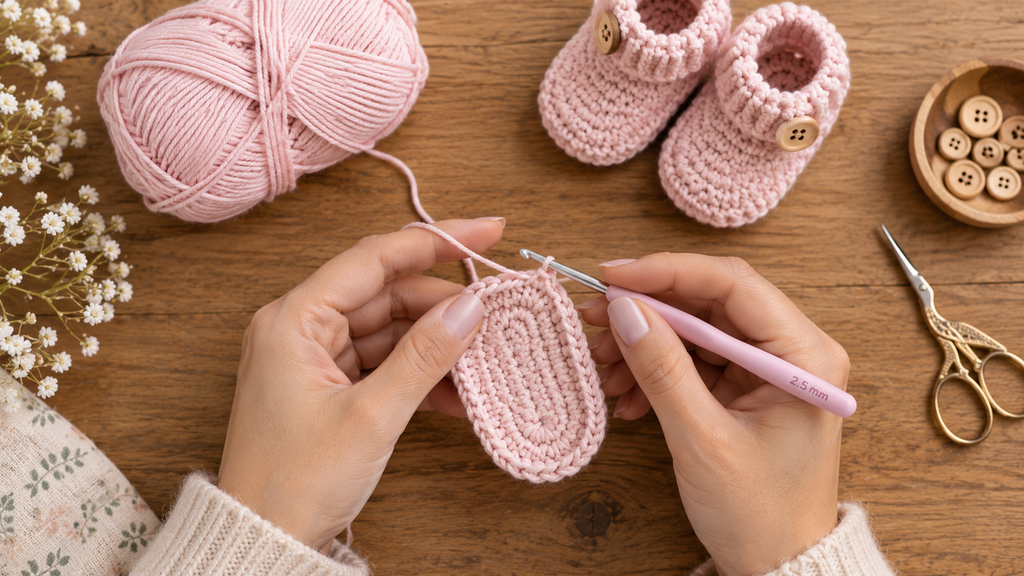
Baby shoes are notoriously charming, but they are also infamous for slipping off squirmy feet. To craft booties that actually stay put, you must track sole length and ankle security rather than traditional shoe sizes.
Comprehensive Baby Booties Sizing Reference:
| Age / Size Category | Average Foot Length | Finished Sole Length (Crochet) | Corresponding US Shoe Size |
| Preemie / Newborn | 3.0 inches (7.5 cm) | 3.25 inches (8.5 cm) | Newborn (Size 0) |
| 0 – 3 Months | 3.5 inches (9.0 cm) | 3.75 inches (9.5 cm) | Size 1 |
| 3 – 6 Months | 4.0 inches (10.0 cm) | 4.25 inches (11.0 cm) | Size 2 – 3 |
| 6 – 12 Months | 4.5 – 4.75 inches (11.5 – 12 cm) | 5.0 inches (12.5 cm) | Size 4 – 5 |
Pro-Tips for Crocheting Baby Booties:
Firm Soles Are Essential: When working the foundation sole of a baby bootie, keep your tension firm. A floppy sole will bunch up and make it uncomfortable for a baby who is learning to stand or crawl.
Secure Fastenings: Always incorporate an ankle strap, ribbon, or functional drawstring for babies over 3 months old to prevent the shoes from kicking off during stroller rides.
Welcome back to the second and final part of our comprehensive masterclass guide on baby crochet sizing! In Part 1 of this ultimate series, we explored the critical importance of accurate measurements, tension management, gauge swatches, and provided detailed sizing charts and professional insights for Baby Hats and Baby Booties.
Now, we transition into the larger, more structurally intricate projects that require careful attention to proportions, shaping, and drape: Baby Sweaters (Cardigans & Pullovers) and Baby Blankets. Because sweaters involve multiple panels, complex armhole shaping, sleeve lengths, and neck openings—while blankets range from tiny car seat lovies to full-sized crib covers—having a dependable, standard measurement reference is absolute key to avoiding frustration and unravelling hours of hard work. Let us dive straight into the comprehensive sizing charts, structured data tables, and expert strategies for sweaters and blankets.
The Ultimate Baby Crochet Sweater Size Chart
Crocheting baby sweaters is one of the most fulfilling and rewarding milestones for any crocheter. Whether you are crafting a seamless top-down raglan cardigan or a classic buttoned pullover, getting the chest circumference, sleeve length, and overall torso length right ensures that the baby can move freely, wear layers comfortably beneath, and stay cozy throughout the changing seasons.
When designing baby garments, remember that infants grow rapidly and wear clothes over onesies. Therefore, incorporating positive ease into your sweater calculations is vital. Below is our detailed, easy-to-read reference chart for baby sweater dimensions across standard age groups from newborn up to twelve months.
Comprehensive Baby Sweater Sizing Reference Table:
| Age / Size Category | Finished Chest Circumference | Sleeve Length (Underarm to Cuff) | Total Length (Shoulder to Hem) |
| Newborn (0-3 Mos) | 16 – 17 inches (40.5 – 43 cm) | 4.5 inches (11.5 cm) | 9 inches (23 cm) |
| 3 – 6 Months | 18 – 19 inches (46 – 48 cm) | 5.5 inches (14 cm) | 10.5 inches (26.5 cm) |
| 6 – 9 Months | 19 – 20 inches (48 – 51 cm) | 6.25 inches (16 cm) | 11.5 inches (29 cm) |
| 9 – 12 Months | 20 – 21 inches (51 – 53.5 cm) | 7 inches (18 cm) | 12.5 inches (32 cm) |
Pro-Tips for Crocheting Baby Sweaters:
The Power of Positive Ease: Always design with an extra 1 to 2 inches of positive ease in the chest circumference. Babies wear undershirts, diapers, and onesies underneath their sweaters, so a tight fit will quickly become restrictive and uncomfortable.
Top-Down vs. Bottom-Up Construction: If you want to completely avoid the tedious and frustrating task of seaming separate panels together, opt for top-down raglan construction methods. This allows you to try the sweater on or check physical measurements as you progress down the torso.
Choosing the Right Stitch Pattern: Keep stitch patterns relatively simple for baby sweaters. Textured stitches like moss stitch or basic double crochet rows provide wonderful elasticity and warmth without creating heavy, rigid fabric.
Text to hyperlink: Maintaining even tension across complex sweater panels requires reliable tools. Grab this Professional Ergonomic Crochet Hook and Locking Stitch Marker Set on Amazon to prevent hand fatigue and track your raglan increases effortlessly.
👉 Click the link to check the price on Amazon

The Ultimate Baby Crochet Blanket Size Chart
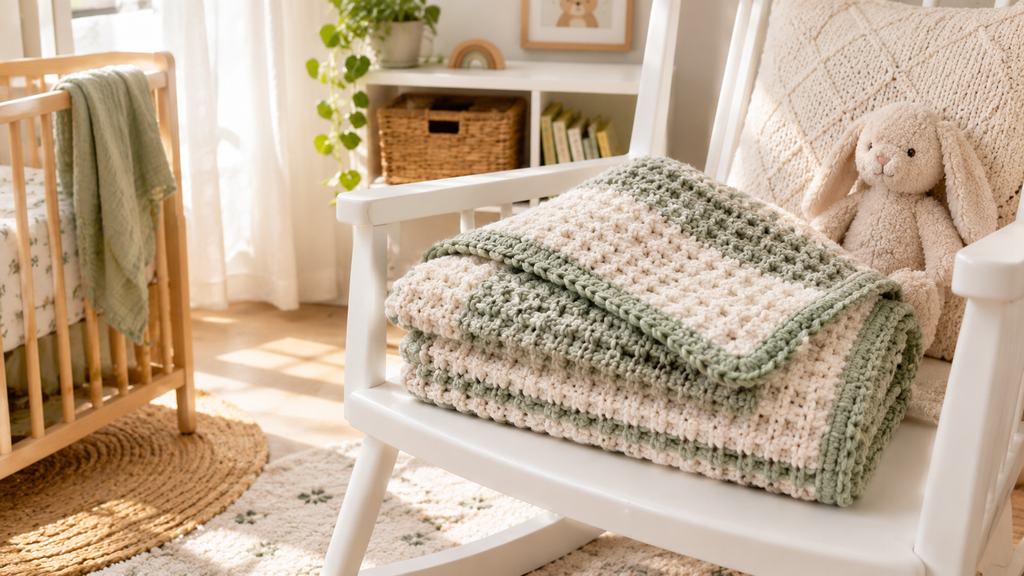
Baby blankets are timeless, cherished keepsakes that are frequently passed down through generations as family heirlooms. However, choosing the correct dimensions can sometimes feel overwhelming because baby blanket sizes vary dramatically depending on their specific practical use—ranging from a quick stroller cover or car seat lovie to a generous crib blanket or a traditional swaddling receiving blanket.
To ensure your time and beautiful yarn investment result in a functional masterpiece, reference our structured blanket sizing chart below before chaining your foundation row.
Comprehensive Baby Blanket Sizing Reference Table:
| Blanket Type / Style | Recommended Dimensions (Width x Length) | Ideal Yarn Quantity (Approximate) | Primary Purpose / Practical Use |
| Security Lovie / Mini | 12 x 12 inches (30 x 30 cm) | 150 – 250 yards | Comfort object for newborns to cuddle in car seats or bassinets. |
| Stroller / Pram Blanket | 30 x 35 inches (76 x 89 cm) | 800 – 1,000 yards | Perfect fit for strollers, prams, car seats, and Moses baskets. |
| Crib / Cot Blanket | 36 x 50 inches (91 x 127 cm) | 1,400 – 1,800 yards | Standard size for cribs, tummy time play mats, and toddler beds. |
| Receiving Blanket | 40 x 40 inches (100 x 100 cm) | 1,200 – 1,500 yards | Square format ideal for swaddling, nursing covers, and nursery decor. |
Pro-Tips for Crocheting Baby Blankets:
The Foundation Chain Trap: When working a blanket flat from the bottom up, make sure your starting chain is not too tight. A tight starting chain causes the bottom edge to curl inward or flare improperly. Alternatively, use a foundation single or double crochet stitch for a wonderfully stretchy and professional edge.
The Importance of Blocking: Blankets made with natural fibers or intricate open-work lace patterns benefit immensely from wet blocking. Pinning your finished blanket out to exact dimensions ensures clean, straight borders and showcases your stitch definition beautifully.
Border Selection: Always finish your baby blankets with a sturdy border, such as a few rounds of single crochet or crab stitch, to prevent edges from stretching out over years of heavy use and washing.
Text to hyperlink: Give your finished baby blankets and garments a crisp, professional finish using this Interlocking Blocking Mats and Stainless Steel T-Pins Set on Amazon—essential for smoothing out uneven edges and squaring up blankets.
👉 Click the link to check the price on Amazon
Troubleshooting Common Sizing Mistakes in Baby Crochet
Even with the most precise reference charts and premium supplies, crocheters occasionally run into unexpected challenges when crafting infant garments and accessories. Being aware of these common pitfalls can save you hours of unravelling:
Skipping the Gauge Swatch: Assuming an infant’s age strictly dictates their clothing size is a frequent trap. Always make a quick 4×4 inch gauge swatch before starting garments like sweaters to match your individual stitch tension to the pattern specifications.
Incorrect Measuring Techniques: When measuring a hat diameter, sweater chest, or blanket width, ensure the fabric is relaxed and flat on a smooth table rather than stretched out. Stretching distorts the measurements and leads to items that end up too small or misshapen.
Neglecting Yarn Care Labels: Baby items require frequent washing due to spills and everyday messes. Always verify that your chosen yarn is machine-washable and dryable so that the recipient parents can care for the handmade item effortlessly without damaging the fibers.
Frequently Asked Questions (FAQs) About Baby Crochet Sizing
How can I choose the right hat size if I am making a gift and do not know the exact head measurement?
If you are crafting a surprise gift, the 0-3 months size is generally the safest and most popular choice. It fits most babies after their initial weeks and leaves a little room for growth without being overwhelmingly large.
Why do handmade baby booties keep slipping off, and how can I prevent it?
Babies love to kick and wiggle, which easily shakes off loose shoes. To fix this, ensure your sole dimensions are accurate, and always incorporate a secure fastening method like an ankle strap, ribbon, or functional drawstring for babies over 3 months old.
Should I add extra room when crocheting baby sweaters?
Yes, absolutely! Always incorporate 1 to 2 inches of “positive ease” into your sweater chest measurements. Babies regularly wear onesies, undershirts, and diapers underneath their garments, so a bit of extra space ensures total comfort.
What is the most versatile baby blanket size to crochet?
If you want a multi-purpose blanket, a stroller/pram size (around 30 x 35 inches) or a square receiving blanket (40 x 40 inches) are the most versatile options. They fit easily into car seats, strollers, and cribs while remaining useful for daily tummy time.
Conclusion
Mastering baby crochet sizing is the ultimate secret to transforming your handmade projects from frustrating guesses into professional, heirloom-quality treasures. Throughout this comprehensive two-part guide, we have explored the precise dimensions and expert strategies for the four most essential baby items: adorable hats, secure booties, comfortable sweaters, and versatile blankets. By prioritizing accurate gauge swatches, understanding positive ease, and utilizing reliable sizing reference charts, you can ensure that every tiny garment fits a growing baby perfectly from day one. Whether you are crafting heartfelt gifts for an expecting loved one or building inventory for your handmade baby boutique, having these measurements at your fingertips guarantees success. Bookmark this ultimate size chart guide, grab your favorite yarn, and start creating with confidence today!
Now, I hope that I have benefited you in this subject, and I hope that you have understood the method of choosing sizes correctly. I thank you for reading the article.