Disclosure: This post contains affiliate links. As an Amazon Associate, we earn a small commission from qualifying purchases at no extra cost to you. We only recommend products we truly love and trust.
As someone who is interested in handmade crochet crafts, in this article I will show you how to properly wash and care for your crochet products. I will explain the process in simple and easy-to-follow steps, helping you keep your handmade crochet items clean and in good condition without making things complicated.

Handcrafted baby items—whether a cozy blanket, tiny booties, or a delicate crochet teether—are more than just wool and yarn. They are precious keepsakes woven with time, effort, and love. However, for new parents and gift recipients, the biggest concern after receiving these beautiful creations is often: “How do I wash this without ruining or shrinking it?”
Caring for handmade crochet baby clothes and accessories doesn’t have to be nerve-wracking. With the right techniques, gentle detergents, and proper drying methods, you can preserve the softness, elasticity, and shape of these cherished items for years to come.
This comprehensive guide is designed to take the guesswork out of maintaining handmade baby items. Whether you are a beginner looking to understand yarn fibers or a parent wanting to keep your baby’s favorite blanket clean and soft, this step-by-step care manual has you covered!
- Why Learning Proper Crochet Care is Essential for Beginners
Before diving into washing techniques, it is important to understand why proper garment care is a crucial skill for every craft enthusiast and parent:
Prevents Heartbreaking Shrinkage: Natural fibers like wool and alpaca can shrink significantly or felt when exposed to heat and agitation.
Maintains Softness for Sensitive Skin: Babies have delicate skin; using the right washing routines ensures that fibers remain plush rather than scratchy.
Extends Garment Lifespan: Proper care prevents pilling, stretching out of shape, and fiber breakdown over time.
Protects Handmade Investments: Handmade pieces represent hours of work or financial investment; preserving them ensures they can be passed down as family heirlooms.
Beginner Tip: Always check the yarn label before starting any wash routine! The yarn care symbols provide instant clues about fiber content and temperature tolerances.
- Recommended Cleaning Supplies & Tools
To ensure your handmade crochet baby items remain soft and beautifully shaped after every wash, having the right supplies on hand makes all the difference.

Essential Care Supplies Checklist:
- Gentle, No-Rinse Delicate Wash or Gentle Baby Detergent:
Harsh detergents can strip natural moisture from fibers and leave irritating residues on baby items. Choose hypoallergenic, gentle liquid soaps.
🛒 Recommended Pick: Protect delicate fibers and sensitive baby skin with Gentle No-Rinse Wool & Delicate Wash on Amazon. - Mesh Laundry Wash Bags (For Machine Washing):
When machine washing is permissible, placing delicate crochet items inside zipper-locked mesh bags protects them from snagging on zippers or buttons of other clothes.
🛒 Recommended Pick: Keep your stitches safe during gentle wash cycles with Honeycomb Mesh Garment Laundry Bags on Amazon. - Collapsible Mesh Flat Drying Rack:
Hanging wet crochet items on hangers causes them to stretch out of shape due to water weight. Drying them flat on mesh ensures proper airflow and maintains their original dimensions.
🛒 Recommended Pick: Maintain garment shape effortlessly using a Stackable Flat Mesh Clothes Drying Rack on Amazon. - Clean Absorbent Towels: Essential for pressing out excess water without twisting or wringing delicate stitches.
- Rust-Proof Blocking Pins & Mats: Useful for reshaping blankets and garments back to their exact original measurements after washing.
- Fiber Care & Washing Temperature Reference Chart
Different yarn fibers react differently to water temperature, mechanical agitation, and detergents. Refer to this handy quick-reference table before washing any handmade item:
| Fiber Type | Recommended Wash Method | Ideal Water Temp | Drying Method | Shrinkage Risk |
| 100% Organic Cotton | Hand Wash or Gentle Machine Cycle | Cool / Lukewarm (Under 30°C) | Lay Flat to Dry | Medium (if exposed to heat) |
| Superwash Merino Wool | Gentle Machine Cycle in Mesh Bag | Cold Water Only | Lay Flat to Dry | Low to Moderate |
| Non-Superwash Wool | Hand Wash Only (No Agitation) | Cold Water Only | Lay Flat / Block to Shape | High (Felts easily) |
| Acrylic / Baby Blends | Gentle Machine Cycle | Warm / Cool Water | Tumble Dry Low / Lay Flat | Very Low |
- Step-by-Step Washing Guide: Hand Washing vs. Machine Washing
Method A: The Golden Standard—Gentle Hand Washing (Step-by-Step)
Hand washing is the safest method for almost all handmade crochet baby items, especially items made from natural fibers or delicate amigurumi toys.
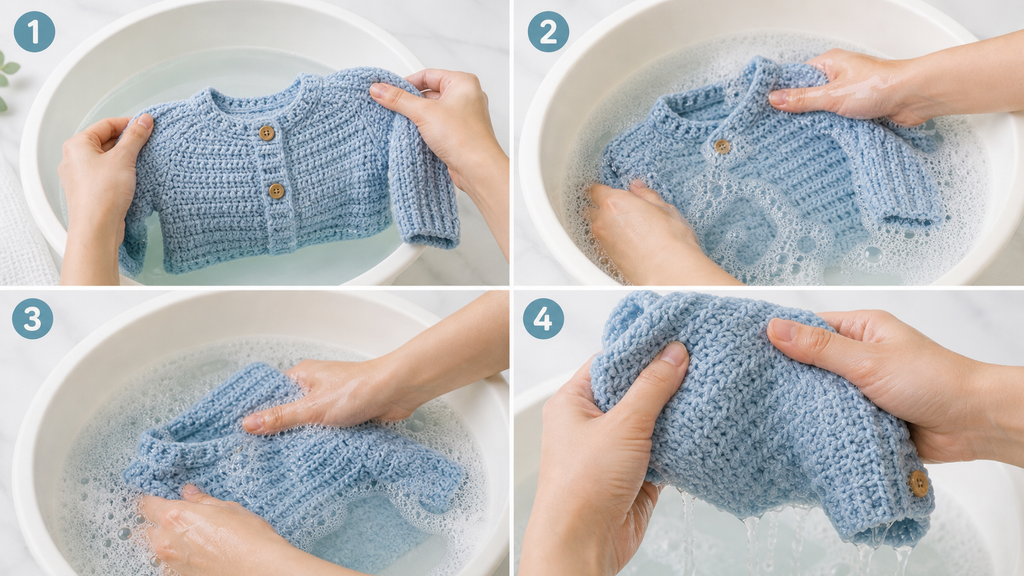
Step 1: Fill a Clean Basin: Fill a clean sink or basin with cool or lukewarm water (never hot). Add a small amount of mild, no-rinse delicate detergent and mix well.
Step 2: Submerge and Soak: Place the crochet item into the water. Gently press it down so it absorbs the soapy liquid. Do not rub, twist, or scrub the fabric, as friction causes pilling and felting. Allow it to soak for 10 to 15 minutes.
Step 3: Rinse Gently (If using standard detergent): Drain the soapy water and refill the basin with cool, clean water. Gently submerge and press the garment until the soap is completely rinsed out.
Step 4: Remove Excess Water Safely:
Never wring out or twist wet crochet items! Water adds weight, and twisting will permanently stretch out stitches.
Gently press the item against the side of the basin to release excess water.
Method B: Machine Washing Safe Handmade Items
While hand washing is ideal, many modern parents prefer machine washing for convenience, especially with everyday items like acrylic baby blankets or superwash merino wool booties.

Always Use a Mesh Bag: Never throw unbagged crochet items into the washing machine. Aggressive agitators, zippers, and hook-and-loop fasteners on other clothes can snag loops and unravel your work.
Select the Correct Cycle: Set your machine to the “Delicate,” “Hand Wash,” or “Wool” cycle. These settings minimize spin speed and drum agitation.
Water Temperature Settings: Always select Cold Water. Warm or hot water relaxes natural fibers excessively, leading to permanent stretching or fiber shrinking.
Detergent Dosage: Use less detergent than usual. Excessive soap residue builds up within the dense stitches of crochet items, making them feel stiff instead of fluffy once dry.
. Drying, Blocking, and Reshaping: Preserving the Perfect Fit
How you dry a handmade item is just as important as how you wash it. In fact, most shrinking and stretching disasters occur during the drying phase.
The Towel Roll Technique (Removing Excess Moisture)
Before laying your item to dry, use this tried-and-true method to remove water safely without heat:
- Lay a clean, dry, absorbent bath towel flat on a table.
- Place your damp crochet item flat on top of the towel.
- Starting from one end, roll the towel up tightly with the crochet item inside, like a jelly roll.
- Gently press down along the length of the rolled towel using your hands or knees. The towel will absorb up to 80% of the remaining water without stressing the stitches.
- Unroll the towel and remove the item.
Drying & Blocking Steps
Never Hang Dry: Hanging wet crochet items on clotheslines or hangers allows gravity and water weight to pull the stitches downward, distorting the shape permanently.
Lay Flat on a Mesh Rack: Place the item flat on a mesh drying rack in a well-ventilated area away from direct sunlight or central heat vents.
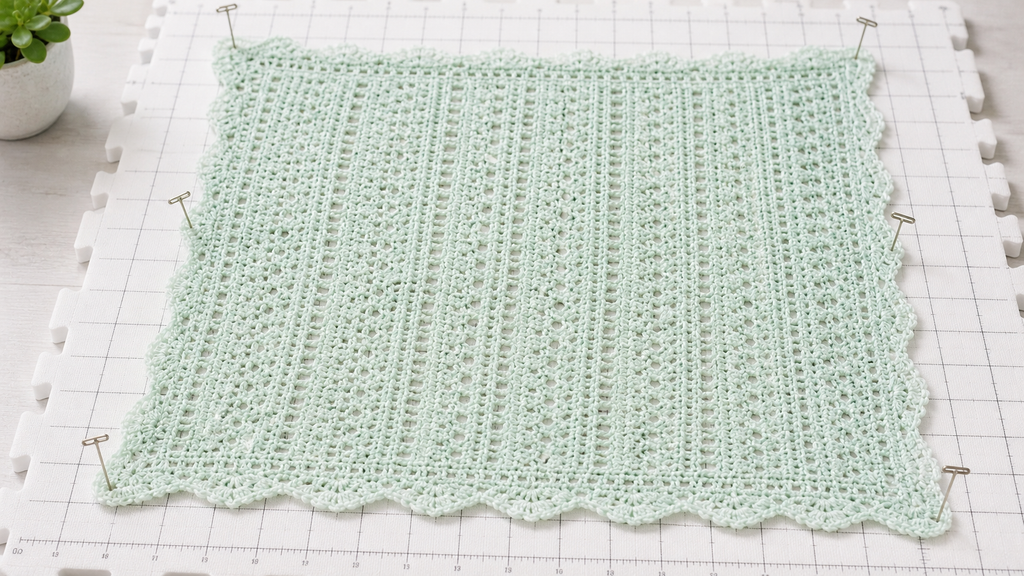
Block to Shape: Gently pat and shape the blanket or garment back to its original dimensions. For blankets, use a measuring tape to ensure the edges are straight and square. Use rust-proof T-pins on foam blocking mats if necessary to hold sharp corners while drying. - Storing & Spot Cleaning Handmade Baby Items
Proper storage and quick spot-cleaning routines keep baby items pristine between full washes, extending their lifespan significantly.
Quick Spot Cleaning for Small Messes
Babies frequently drool or spill milk on small areas of blankets and sweaters. Washing the entire item every time is unnecessary and subjects the fibers to excessive wear.
Act Immediately: Wipe away solids gently with a soft cloth.
Dab, Don’t Rub: Dampen a clean cloth with cool water and a single drop of delicate soap. Dab the stain lightly from the outer edge toward the center.
Rinse: Dab with a second cloth dampened only with cold water to remove soap residue, then air dry flat.
Long-Term Storage Best Practices
When storing handmade baby clothes or blankets as keepsakes for future siblings:
Wash Before Storing: Never store unwashed items! Milk spills or body oils (even invisible ones) attract pests like moths and cause yellowing over time.
Avoid Plastic Storage Bags: Plastic traps moisture, creating a breeding ground for mold, mildew, and yellowing. Instead, wrap items in acid-free tissue paper and store them in breathable cotton storage bags or clean wooden chests.
Pest Protection: Place natural cedar blocks or lavender sachets inside storage containers instead of harsh chemical mothballs. - Troubleshooting Common Crochet Care Problems
Even with careful handling, issues can arise. Here are expert solutions to the most common problems encountered when caring for handmade baby items:

Problem 1: The Item Shrank in the Wash
The Cause: Exposure to heat or excessive agitation (especially with non-superwash wools).
The Solution: Soak the item in lukewarm water mixed with 2 tablespoons of gentle baby hair conditioner or fabric softener for 30 minutes. The conditioner relaxes the fibers. Gently stretch the wet garment back to its original size on a blocking board, pin it in place, and let it dry completely.
Problem 2: Stitches Stretched Out and Lost Shape
The Cause: Hanging wet, using hot water, or heavy machine spinning.
The Solution: Rewet the item thoroughly in cool water. Squeeze out excess water using the Towel Roll Technique, reshape it carefully on a flat drying rack, and gently push the stitches closer together with your fingers to restore density.
Problem 3: Pilling (Small Fuzz Balls) on the Surface
The Cause: Friction from daily use or washing machine tumbling.
The Solution: Never pull pills off with your fingers, as this pulls out more fibers. Use a battery-operated fabric shaver or a specialized sweater comb gently over the surface to glide away fuzz balls safely.
- Conclusion: Preserving Love and Craftsmanship in Every Stitch
Handmade crochet baby items are much more than simple everyday clothing or accessories—they are heartfelt gifts created with time, devotion, and fine craftsmanship. Learning how to properly wash, dry, and store these delicate pieces ensures that their vibrant colors stay bright, their textures remain cloud-soft against delicate baby skin, and their shapes are preserved without shrinking or distortion.
By keeping these fundamental care practices in mind:
Selecting Fiber-Friendly Cleaners: Always opt for gentle, gentle baby-safe detergents or organic wool washes.
Mastering Temperature & Handling: Washing in cool water and avoiding twisting or aggressive spinning prevents irreversible shrinkage and felting.
Drying Flat with Care: Utilizing the towel roll technique and drying on flat mesh racks safeguards your garments from stretching out under water weight.
Addressing Minor Issues Quickly: Taking fast action with spot cleaning and using blocking techniques restores stretched or slightly shrunken items with ease.
With just a little extra patience and the proper care routine, these handmade treasures will remain pristine, durable, and ready to be passed down through generations as cherished family heirlooms.
Don’t Miss Our Complete Baby Sizing & Fitting Guide!
Crafting a new baby project or gift set? Before you start your next creation, make sure your stitches turn out in the exact right dimensions! Check out our comprehensive step-by-step tutorial on Baby Crochet Size Charts: How to Measure Hats, Booties, Sweaters & Blankets to guarantee a flawless, comfortable fit from newborn up to 12 months!
Now that I have shared everything you need to know about this topic, I hope this article has been helpful and informative. Thank you for taking the time to read this article!